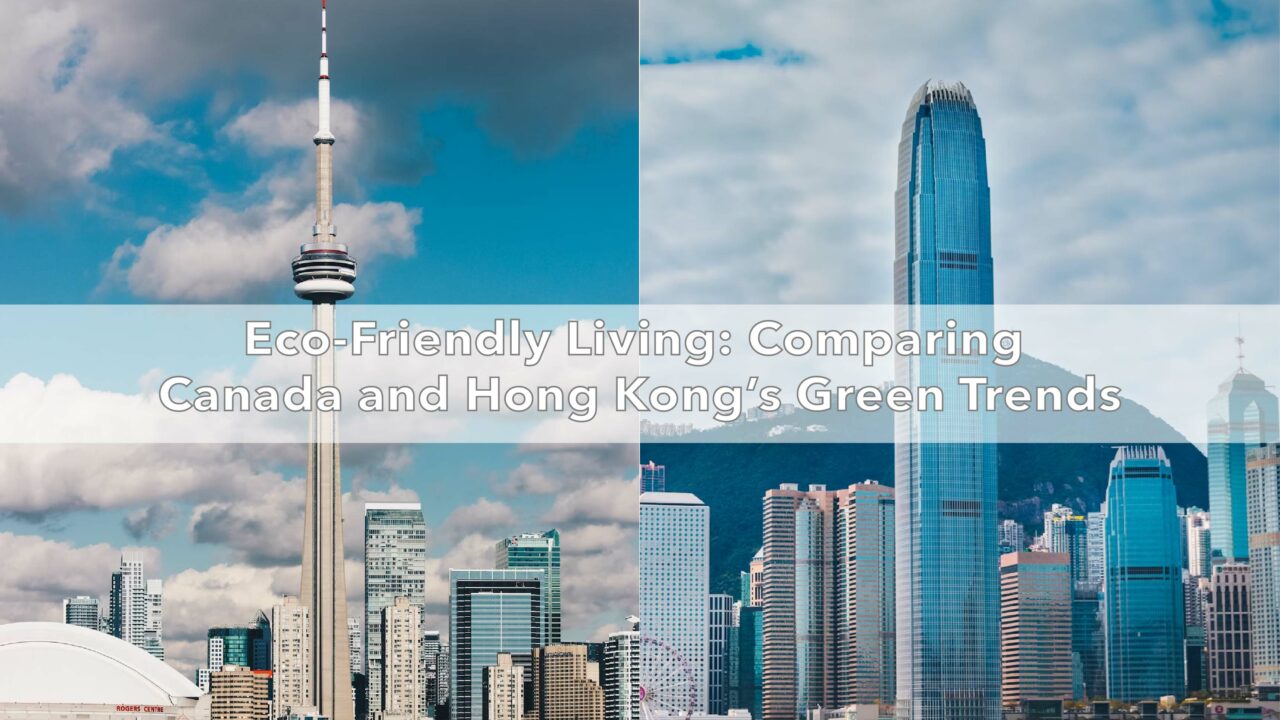
As global awareness of environmental issues rises, both Canada and Hong Kong are embracing eco-friendly initiatives—but their approaches reflect unique cultural, geographic, and economic factors. Let’s explore how these two places compare in their journey toward sustainability.
1. Environmental Awareness and Consumer Behavior
In Canada, eco-consciousness is deeply embedded in daily life. Surveys show a strong preference for sustainable products, with many Canadians willing to pay premiums for eco-friendly goods and services. Recycling programs are widespread, and the culture of reducing waste and mindful consumption is growing steadily.
In Hong Kong, awareness has surged recently, especially among younger generations. However, dense urban living and limited space create challenges for recycling and waste reduction. Efforts like plastic bag levies and campaigns to reduce food waste are gaining traction, but consumer adoption still faces obstacles such as convenience and price sensitivity.
2. Waste Management and Circular Economy
Canada’s approach to waste management emphasizes landfill diversion, extensive recycling infrastructure, and growing support for circular economy models. Programs for composting, electronics recycling, and product take-back are common across provinces.
Hong Kong, with limited land for landfills, relies heavily on waste-to-energy facilities and has started pilot circular economy initiatives. However, recycling rates remain relatively low compared to Canada, partly due to logistical challenges and less public participation.
3. Green Transportation
Canada is advancing in electric vehicle (EV) adoption with government incentives, expanding charging infrastructure, and growing public awareness. Urban planning increasingly supports cycling and public transit, especially in major cities like Vancouver and Toronto.
Hong Kong also promotes electric vehicles, particularly electric buses and taxis, to combat urban pollution. However, high population density and limited space prioritize public transit systems like the MTR, which is one of the most efficient mass transit networks globally.
4. Sustainable Building Practices
Green building certification programs such as LEED and WELL are widely adopted in Canada, with emphasis on energy efficiency, renewable energy integration, and healthy indoor environments. Passive house designs and smart home technologies are gaining popularity.
Hong Kong is rapidly developing its green building standards through BEAM Plus, focusing on energy efficiency and sustainable construction in a dense urban context. Innovative vertical greenery and smart building technologies are increasingly implemented due to space constraints.
5. Food and Lifestyle Trends
Plant-based diets and locally sourced food are increasingly popular in Canada, motivated by health and environmental concerns. Urban agriculture, community gardens, and farmer’s markets support sustainable food systems.
In Hong Kong, while plant-based options are growing, food culture is diverse and includes significant meat consumption. Urban farming initiatives are emerging but face challenges due to limited space and high costs.
Summary
| Aspect | Canada | Hong Kong |
| Environmental Awareness | High, strong consumer demand | Growing, especially among youth |
| Waste Management | Advanced recycling, circular economy | Waste-to-energy, growing recycling efforts |
| Transportation | EV incentives, bike-friendly cities | Efficient public transit, EV buses |
| Green Buildings | LEED, passive houses, smart tech | BEAM Plus, vertical greenery |
| Food & Lifestyle | Plant-based trends, local sourcing | Emerging plant-based options, urban farming challenges |
Final Thoughts
Both Canada and Hong Kong are committed to greener futures, but their strategies differ based on local realities. Canada’s vast land and strong eco-culture enable broad sustainability programs, while Hong Kong’s urban density drives innovation in efficient infrastructure and green building.
Learning from each other’s successes can inspire more impactful environmental progress globally. Whether you live in Canada, Hong Kong, or anywhere else, embracing eco-friendly habits contributes to a healthier planet.
#CanGoGreen #EcoFriendlyCanada #GreenHongKong #Sustainability #ClimateAction #UrbanGreenLiving #CircularEconomy #GreenTransport #EcoLifestyle